In the Metamorphoses, Ovid retells the story of love and loss with his usual grace and charm hear the passage in the original Latin and follow in English here. Later, he will deal with the violent end of Orpheus, who renounces the love of women in his sadness and is torn to pieces by angry women in a Bacchanalian fury. In the illustration, by John William Waterhouse, nymphs find his head and his lyre, which have floated to the island of Lesbos.

Horace tells Xanthias the Greek that it’s absolutely fine to be in love with a slave, but does he mean it? Hear Horace’s Latin and follow in English here; see the illustrated blog post here.

Horace encounters a young woman whose attractions make him think again about his amorous days being over.

Hear Horace’s Latin and follow in English here; see the illustrated blog post here.

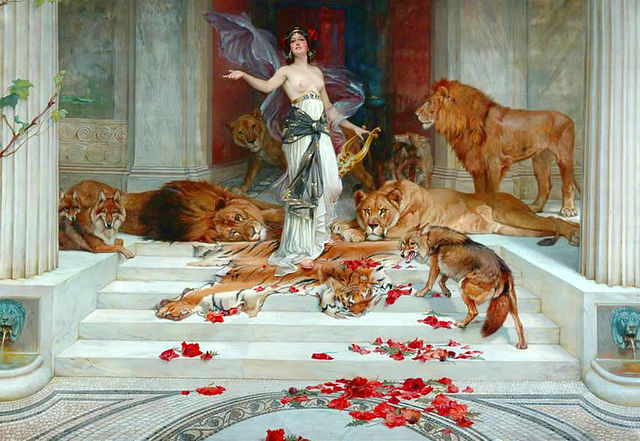
Pyrrha the femme fatale has a new lover, who has yet to find out that the experience is not destined to be all calm weather and plain sailing. Horace speaks as someone who has survived shipwreck in Pyrrha’s stormy waters, and in gratitude for his escape has hung his wet clothes on the temple wall as a thank-offering to the God of the sea (Neptune, or Cupid?)

In the illustration a more famous siren, Cleopatra, awaits a visit from Mark Antony.

Hear Horace’s Latin and follow in English here.
Today’s post from Virgil’s Georgics continues his idealised love-song to the farming life. Hear Virgil’s Latin and follow in John Dryden’s 17th-century English translation here; see the blog post with some happy pigs here.