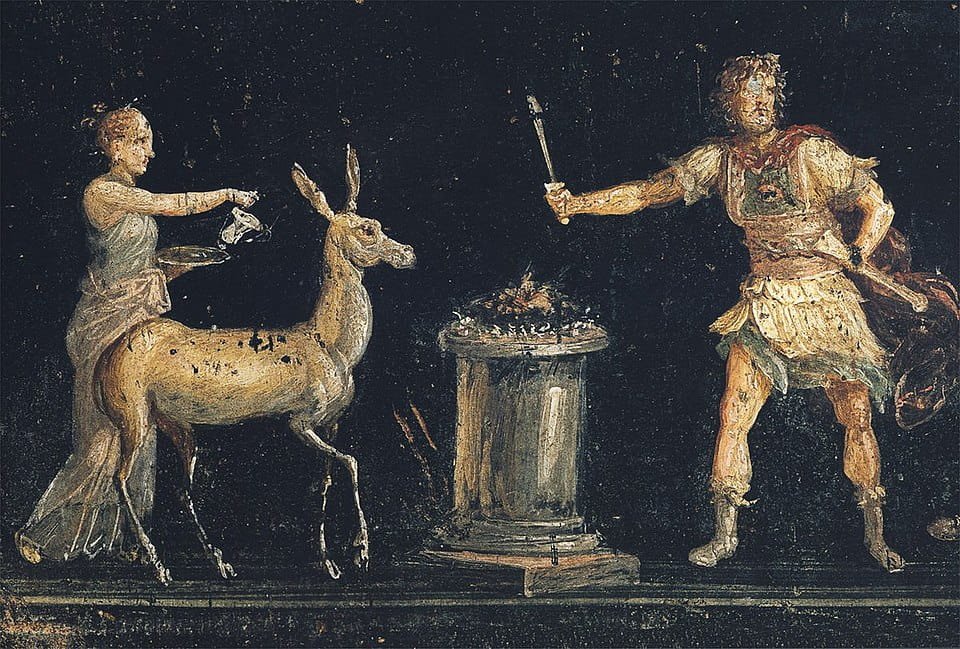
Diana and Apollo, brother and sister, were both associated with the bow; Diana as Goddess of the hunt, Apollo because he could be the bringer of sickness and death, an attribute with which he appears at the opening of Homer’s Iliad when the Greek leaders refuse to restore his priest’s daughter to her father. Octavian, the future Emperor Augustus, dedicated a temple to Apollo in 28 BCE, which very likely prompted this piece; Horace might well also have felt a particular affinity with Apollo as the God of Poetry. The illustration shows a sacrifice to Diana from the House of the Vetti at Pompeii. Hear Horace’s Latin and follow in English here.
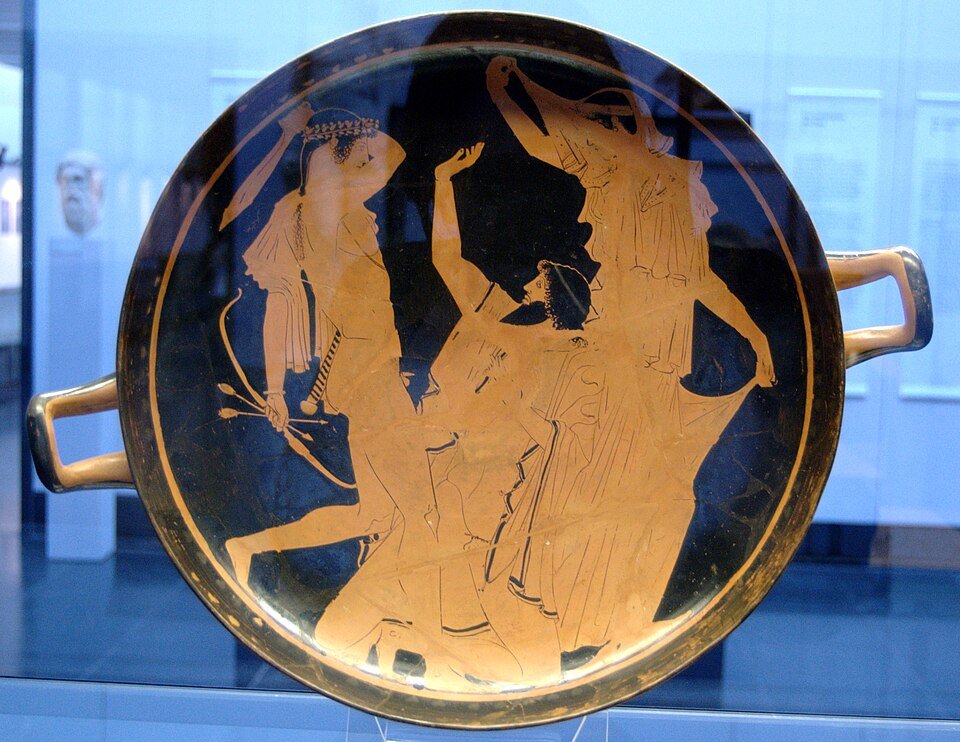
In Horace’s ode, Apollo threatens his brother, Mercury, with dire consequences if he does not return his herd of stolen cattle. How does the trickster-God respond? By stealing Apollo’s quiver! Hear Horace’s Latin and follow in English here.
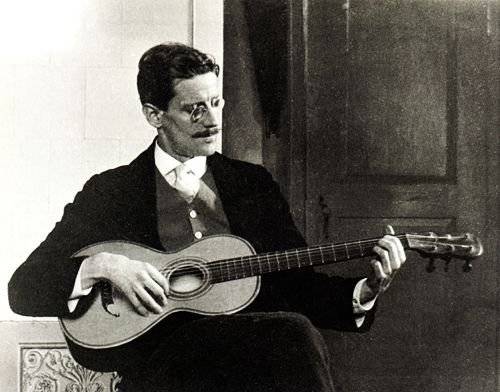
Today’s new post recalls elements from Aeneas’s underworld journey in the Aeneid while expressing Joyce’s feelings at the death of his mother. See it and read more about it here.
This non-Latin poem is a skit on the nursery rhyme, “Ride a cock-horse to Banbury Cross” by James Joyce who wrote it to promote a chapter that he was publishing of Finnegans Wake – Anna Livia Plurabelle is Dublin’s river Liffey personified. Joyce belongs on Pantheon Poets for his debt to Homer, and if you do not know this little piece, I think you will like it.

A literary exercise or a cry of pain? Either way, Horace’s ode to jealousy packs a powerful punch into a short poem. In the illustration by John Singer Sargent, the furies are tormenting Orestes.
Hear Horace’s Latin and follow in English here.