Be patient, she’s too young, Horace advises an anonymous addressee. Hear the poem in Horace’s original Latin and follow in English here; see the illustrated blog post here.

This is a landscape selection from the Latin poets (see the selections index here). The ancients would have assumed that the world was boundless and nature was inexhaustible, in contrast Continue Reading

Pantheon Poets continues to offer you a direct taste of spoken Latin poetry. You can follow the poems in the original whether you know Latin or not – you might for example be interested in later European writers and curious about what Latin influences meant to them. Today’s post is the final part of the story of Laocoon from Book 2 of Virgil’s Aeneid. He has warned the Trojans not to trust the wooden horse that the Greeks have left – he fears Greeks even when they bring gifts. Now, as fate and the Gods bring the fall of Troy ever closer, Laocoon pays a terrible price for his warning.
Today we publish a new selection of poems by Latin authors to hear in Latin and follow in English. See the selection here.

Not everyone welcomed the Paris of the boulevards that we so admire today when in the nineteenth century swathes of a much-loved, ancient city were swept away to make way for it. Today’s poem uses the classical motif of Andromache, widow of Troy’s greatest warrior, Hector, and the image of a trapped and desperate swan to express Baudelaire’s vision of Paris changed for ever and the anguish of all those who long for something irretrievably lost. Hear the poem in the original French and follow in English here.
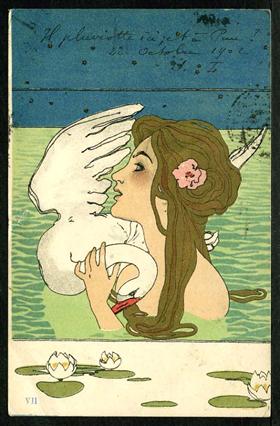
Today’s poem is W B Yeats’s powerful sonnet on Leda and the swan, showing that he could be inspired by classical, as well as celtic, myth. Read the poem here.

We have revised our translation of perhaps Catullus’s most famous poem, “Vivamus, mea Lesbia, atque amemus” – Lesbia, let’s live and love. Hear it in the original Latin and follow in English by following the link to the poem page here.

By Horace’s day, the paraklausithuron – a would-be lover’s complaint outside a locked door – was an established poetical theme. We should probably take this bravura variation on the theme, with all its clues and puzzles about the scenario that Horace hints at without spelling out, as literature rather than autobiography. “Lyce”, a nickname that Horace uses in two other poems, carries a flavour of loose living: there is no particular narrative continuity between the three pieces to suggest that we are dealing with the same Lyce in all.
Hear Horace’s Latin and follow in English here.