
This selection is on the theme of Carpe diem – these days usually translated as “seize the day”, but you could equally well translate it as “pluck” the day – Continue Reading

Thunder from a clear sky reveals to Horace the real presence of the Father of the Gods.
See and hear Horace’s Latin translated and recited here.
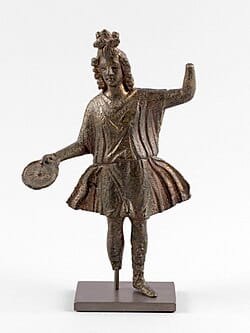
Phidyle, the addressee of this Ode, is the bailiff’s wife on a modest country estate. One of the things that went with the job was to make sure that the regular round of observance and sacrifice to the domestic gods of the home and the estate were duly carried out to help guard against anything that might go wrong with crops or livestock: Horace stands in the place of the master of the household, whose permission and approval for the necessary rituals was required. The intention is to sacrifice a pig, but the poem suggests that routine observances of this kind were not enough, but, on the other hand, that true piety towards the gods would satisfy them even should no costly offering be available. This little Lar, or household god, of the type that Phidyle might have had on her domestic altar, was found in Paris.
Horace reflects on the predicament of a beautiful courtesan who is becoming an object of indifference, or even scorn, as she ages and loses her looks. How far he sympathises, and how far he is pleased at the change, is hard to say.
Hear Horace’s Latin and follow in English here.
See the illustrated blog post here.
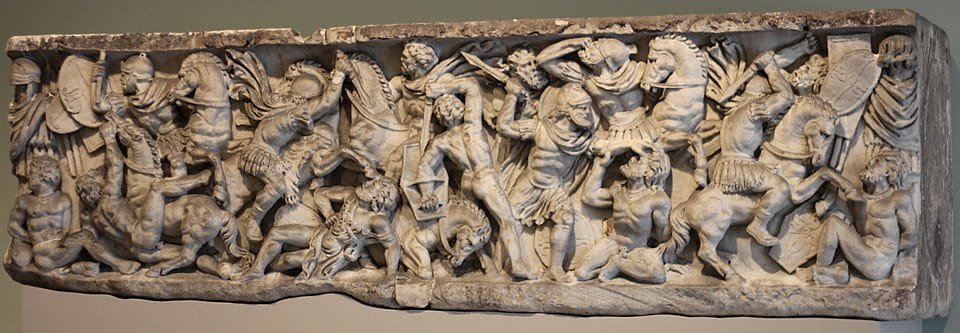
Horace opens his second book of odes with a resounding tribute to a fellow writer, Gaius Asinius Pollio. Pollio was what we sometimes call a Renaissance man. Until 39 BCE, he was a major political and military figure, who held the consulship and earned a triumph by his military success: thereafter, he was distinguished as a tragic playwright before picking up the threads of a history of the civil wars which his predecessor, Sallust, had died without completing. Though Horace demurs, the poem is a fine example of his ability to deal vividly in lyric verse with subject-matter usually regarded as the domain of epic poetry. Hear Horace’s Latin and follow in English here.

As Horace brings the final book of his Odes to an end, an idealised Roman family of the future gathers to sing Augustus’s praises and give thanks for the peace and the imperial power that he has brought to Rome.
Hear Horace’s Latin and follow in English here.