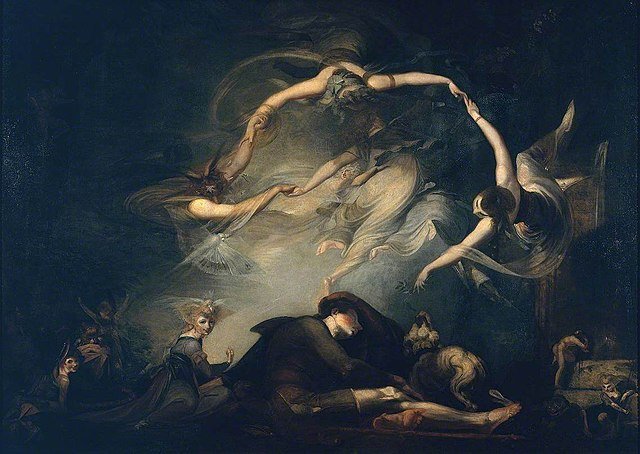
Today’s poem – topically given events in Europe in 2022 – is Thomas Hardy on the madness of war. See and hear it here, and see the illustrated blog post here.
As civil war threatens, the poet Lucan sums up the protagonists: Pompey (pictured) has popularity, authority and the advantages of a mighty reputation, but Caesar has something more.
See and hear Lucan’s Latin from his De Bello Civile and follow in English here.
Today sees a new sound recording in our post of the opening lines of Homer’s Odyssey. Hear Homer’s Greek and follow in English translation here.
The illustration shows the Sorceress, Circe, who is only one of the many dangers that Odysseus encounters on his … well … Odyssey.
Charles Baudelaire, a great poet of the modern era, turns like many others to the literature of the ancient world for an image which expresses his feelings about his artistic predicament. Hear his poem, “Les Plaintes d’un Icare”, read by Béatrice Damamme-Gilbert and follow in English here.
Although the myth of Icarus is now very familiar to us, it may have received less attention in the ancient world before Ovid celebrated it in his Metamorphoses. The earliest surviving literary references do not date from much before his time, and the difficulty of finding representations from earlier Greek vase painting may be another indication. You can hear Ovid’s treatment in the original and follow in English here.
In today’s Ode, Horace exclaims at the futility and presumption of the rich, who go in for grand building works, even encroaching on the sea in places like the luxurious seaside resort of Baiae. He prefers the simple life on his Sabine farm.
Horace uses Hipponactean metre, an unusual one found only here among his works. Hear his Latin performed in the original and follow in English here.