In today’s post from his Georgics, Virgil explores the sexual instinct, common to men and animals. Hear the Latin and follow in English here; see the illustrated blog post with a horse painted by George Stubbs here.

In today’s Ode, Horace exclaims at the futility and presumption of the rich, who go in for grand building works, even encroaching on the sea in places like the luxurious seaside resort of Baiae. He prefers the simple life on his Sabine farm.
Horace uses Hipponactean metre, an unusual one found only here among his works. Hear his Latin performed in the original and follow in English here.
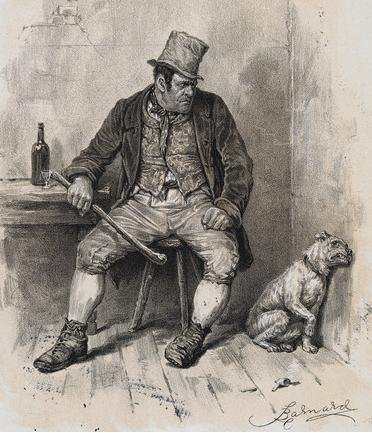
Two contrasting Victorian takes on death – fulfilment and release as a lark sings over a gorgeous sunset, or the murderous “Ruffian on the stair”?
Read the two very different poetic visions here.

A E Housman was a professor of Latin as well as a famous poet of the life of the English countryside. Because of these twin talents, his translation of Horace’s “Diffugere nives” (Ode 4.7) captures its sentiment and mood perfectly although he uses English poetic techniques and convention which could hardly be more different than those of Latin poetry. All the more reason to encounter Latin poetry in the original, with a reading and a translation, at Pantheon Poets.
In the illustration, Theseus and Pirithous, whose legendary friendship is referred to at the end of the poem, rid the land of robbers and liberate abducted women.
See and hear Horace’s original alongside Housman’s translation here.

In a tremendous tour-de-force, Virgil describes an incredibly powerful storm at sea as Aeneas and his men fight for survival.
Hear Virgil’s powerful Latin recited and follow in a new English translation here.
Photograph of Roman Mosaic in the Musée de Sousse by Habib M’Henni.

Today’s poem is traditionally ascribed to Virgil: it is plenty good enough, though not his usual style. If it does not make you want to spend a hot afternoon relaxing in the shade, see a doctor. The illustration of a Syrian dancer is by Waterhouse.
Hear the Latin and follow in English here.

As war with Turnus and the Italians looms for Aeneas and his Trojans, Father Tiber offers helpful advice. Hear the Latin from Book 8 of the Aeneid and follow in English here.