
This is Pantheon Poets’s selection of twenty-eight of Horace’s poems in the order in which they appear in his four Books of the Odes. Click on the description of each Continue Reading
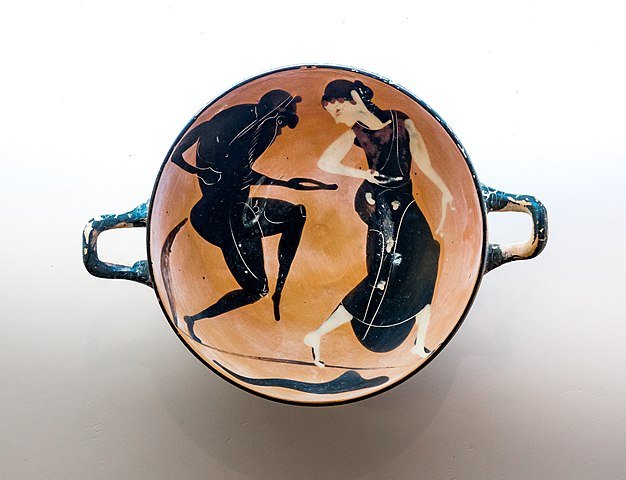
Many of Horace’s Odes are performed and translated on Pantheon Poets, but the first poems in the first Book, published in 23 BCE have a particularly important function. The very first Ode makes two very important points at the outset: the debt and affection that Horace feels for his great patron and friend Maecenas, to whom he effectively dedicates the whole collection; and the tremendous ambition that Horace has to create a new and distinctively Roman form of poetry, based on the great Greek lyric models of the past.
In the illustration as in Horace’s poem, a satyr dances in a typically Greek pastoral setting.
Hear Horace’s poetry performed in the original Latin and follow in a new English translation here.

Horace’s second Ode paints a vivid picture of the time of troubles that Rome, beset by civil war, has suffered, before turning to identify and praise her saviour – the new Emperor, Augustus. The praise is lavish by our standards – it identifies the Emperor with a God on Earth – but there is no particular need to suspect Horace, an old republican, but now completely associated with the new regime and its leaders, of insincerity. The stability and peace provided by the new order would have been welcome to very many, as its durabilty – Augustus was to rule for a further 37 years after the date of this poem – shows.
Hear Horace’s Latin performed in the original and follow in English here.
The illustration, from the Ara Pacis, consecrated in 13 BC, is a symbolic representation of the peace and prosperity that Augustus’s reign has brought.

After travelling with Aeneas through Hades, following Virgil at his most epic, it is time for a change. Horace Ode 3.21 sees Horace at his most gential, celebrating wine, friendship and other good things in life.
The illustration is a fresco from Herculaneum, destroyed like Pompeii by the eruption of Vesuvius in 79CE.
Listen in Latin and follow in English here.

This ode is a lively and heartfelt tribute to the God of wine – if you want a potted biography in the form of mythological reference, here it is! Like Virgil’s Aeneas, Bacchus is one of the select band to make the journey to Hades and return to the upper world: in the most charming description of Cerberus in Latin, Horace shows the watchdog of the underworld in unusually gentle mood. The illustration of Cerberus is by William Blake.
Hear the poem in Latin and follow in English here.

Maybe ten years after the publication of his great three first books of Odes in 2023 BCE, Horace finds himself unexpectedly, and perhaps unwillingly, returning to the genre. He has been invited by Augustus to do so as a contribution to the glory of the new, but now very well established, imperial system, and invitations from that quarter are hard to refuse. The purpose of the second Ode in Horace’s new, fourth, book is primarily to celebrate Augustus by looking forward to a victory over a troublesome German tribe, the Sygambri, but he also takes the opportunity to put on record his critical appreciation of another great poet, Pindar. That, rather than dutifully fulsome praise of the Emperor, is what primarily makes this an attractive poem to a modern readership. Nevertheless, it is a good example of how the imperial regime approached establishing and augmenting its prestige through the arts, and the metre, singing and dancing along in Sapphics, make the piece attractive to listen to throughout. The triumph in the illustration is Caesar’s, one of a series painted by the Renaissance master, Mantegna. now in the royal collection at Hampton Court.
Hear Horace’s Latin and follow in English here.