Propertius’s appetites, the envy of Casanova and Don Juan. See the illustrated blog post here and hear the Latin and follow in English here.

Who is this lecher boasting that he can go all night and one woman is not enough? What happened to the Propertius who is always pledging eternal loyalty to Cynthia alone, even when she is treating him like a doormat? It’s a reminder that poets are not necessarily diarists or autobiographers: if they are any good, they are artists, using their creative imagination. If you were a Roman who wanted to write love elegy and didn’t have a lover, you would invent one. If you did have one, you – and she or he – might have views on how literally the relationship should be turned into verse. Conversely, when they seem at their most imaginative and spontaneous, Roman poets may be following a convention or a model from centuries of Greek precedents that we may or may not know about. It all adds to the mystery that is one of the charms of poetry.
Hear the poem and follow in English here.

Omens and prophecy are everywhere in classical literature, as this selection from the work of Virgil shows. In Book 2 of the Aeneid, the priest, Laocoon, foretells here all too Continue Reading
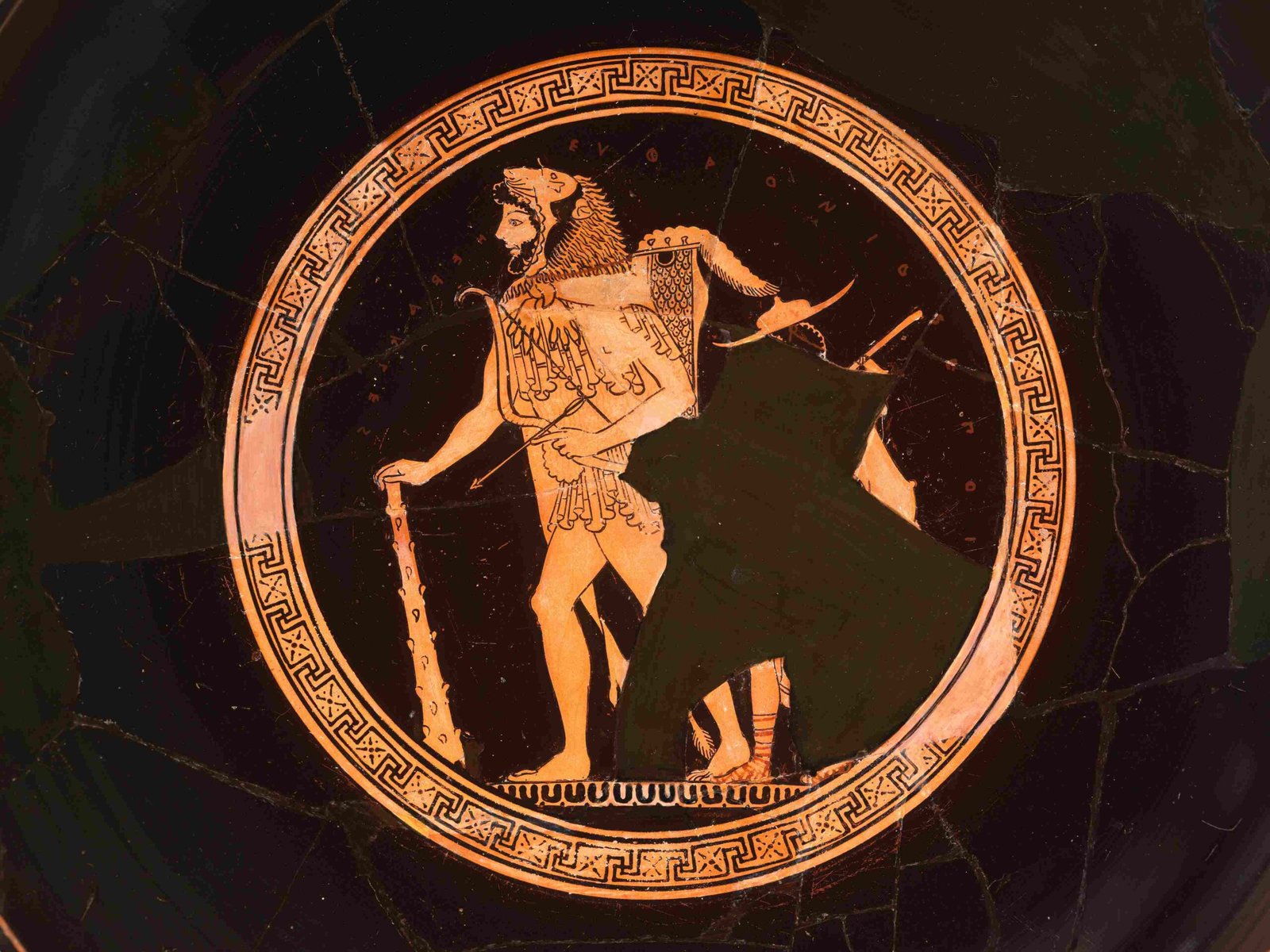
Horace implies that his great friend and patron Maecenas has been asking him to write lyric verse on unsuitable themes, including the victories of Augustus and the deeds of the legendary heroes of myth, including Hercules – shown, courtesy of the Met, on a fifth-century BCE kylix attributed to the painter Onesimos. You can do better justice to Augustus’s achievements yourself in prose, says Horace – I will stick to more familiar lyric territory and sing the praises of the lovely Licymnia.
Hear Horace’s Latin and follow in English here.

The immortal Marcel Proust was born on 10 July 1871. To celebrate, Pantheon Poets posts a recently-published love poem written when he was doing his military service. See the original and a parallel translation here.

Pyrrhus is captivated by his new love, Nearchus, but has he underestimated the lion-lady that he has stolen him from? Hear Horace’s Latin and follow in English here. The “Nearchus” in the illustration is the Emperor Hadrian’s favourite, Antinous.