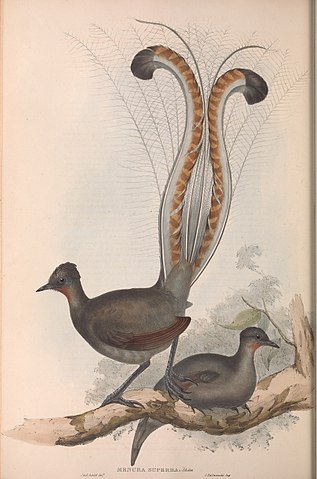
In the “Poscimur” ode, Horace addresses his lyre and claims that, together, they have made a new type of Roman poetry by transmuting Greek originals. The lyre is probably not a real one, any more than this lyre bird is: it stands for Horace’s poetic skill and genius. Hear the poem and follow in English translation here.

Fighting his way to the heart of the palace, Pyrrhus, the son of Achilles, finds King Priam and his wife and daughters defenceless. Hear the denouement in Virgil’s Latin and follow in English here.

In a famous but occasionally puzzling poem, Horace gives the Emperor Augustus’s view of what a young Roman should aspire to become – a soldier like the epic heroes of old, inured to hardship, a terror to Rome’s enemies and willing to die if necessary for his country. In the illustration, by Léonce LeGendre, Hector dies at the hands of the hero Achilles.
Hear Horace’s Latin and follow in English here.

There aren’t any ancient Romans around to show us how they recited poetry, so we can’t be certain just how they did it. So what is the best approach to take, and why? Today’s post at Pantheon Poets is about the approach that we take and what it is based on. Read about it here.
The illustration shows a Choregos and actors in a mosaic from Pompeii.

Today’s post is the first poem in Propertius’s works. He introduces us to Cynthia. He is not happy. Whether this is because he hasn’t got her, or because he has got her, we can’t be quite sure, but by the next poem they will be an item. It will be a long and rocky ride together. Cynthia is a skilled musician and lyre player, which is not the only attribute she has in common with the sirens.

Cynthia is away, probably at the luxurious seaside resort of Baiae, with its entertainments, attractions and temptations. What is she up to? Propertius is afraid that the separation has broken the bond between them, and that a great love may be dead or dying. Not for the first or last time, his imagination is torturing him. Nevertheless he asserts – in the face of some of the evidence – that he is a one-woman man. Cynthia was the first, he says, and she will be his last.
Hear Propertius’s Latin and follow in English here.