
Laocoon warns his fellow-Trojans not to take the Trojan horse into their city. Hear the Latin and follow the English here.
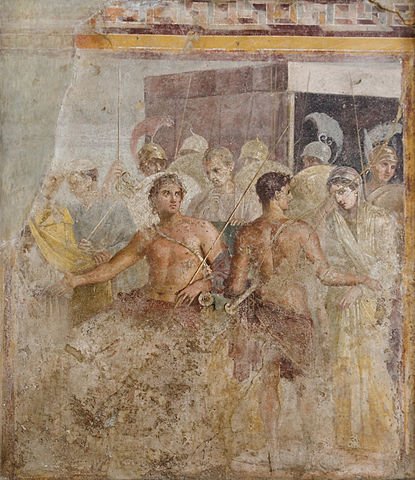
Homer’s great poem begins with the origins of the strife between King Agamemnon and the supreme warrior Achilles that brought the Greek army to the brink of defeat on the plains and seashores in front of the city of Troy. Hear the opening in Greek and follow an English translation here.

Aeneas and Dido have begun their affair. The monstrous Goddess, Rumour, sets to work to spread the news, some fake, some otherwise. Hear the poem here.

Dido has discovered that Aeneas is preparing to leave her, and Carthage, without telling her. Their next interview does not go well. Hear Dido’s reaction here.

A royal hunt follows a gorgeous levee: a great storm rocks all of nature which is matched by the storm of passion between Dido and Aeneas, sheltering in their cave. Hear one of Virgil’s greatest set-pieces in Latin and follow it in English here.