Love and beauty are the best subjects for lyric, says Horace, finding compliments for his patron Maecenas and the Emperor Augustus along the way. Hear Horace’s Latin and follow in English here; see the illustrated blog post here.
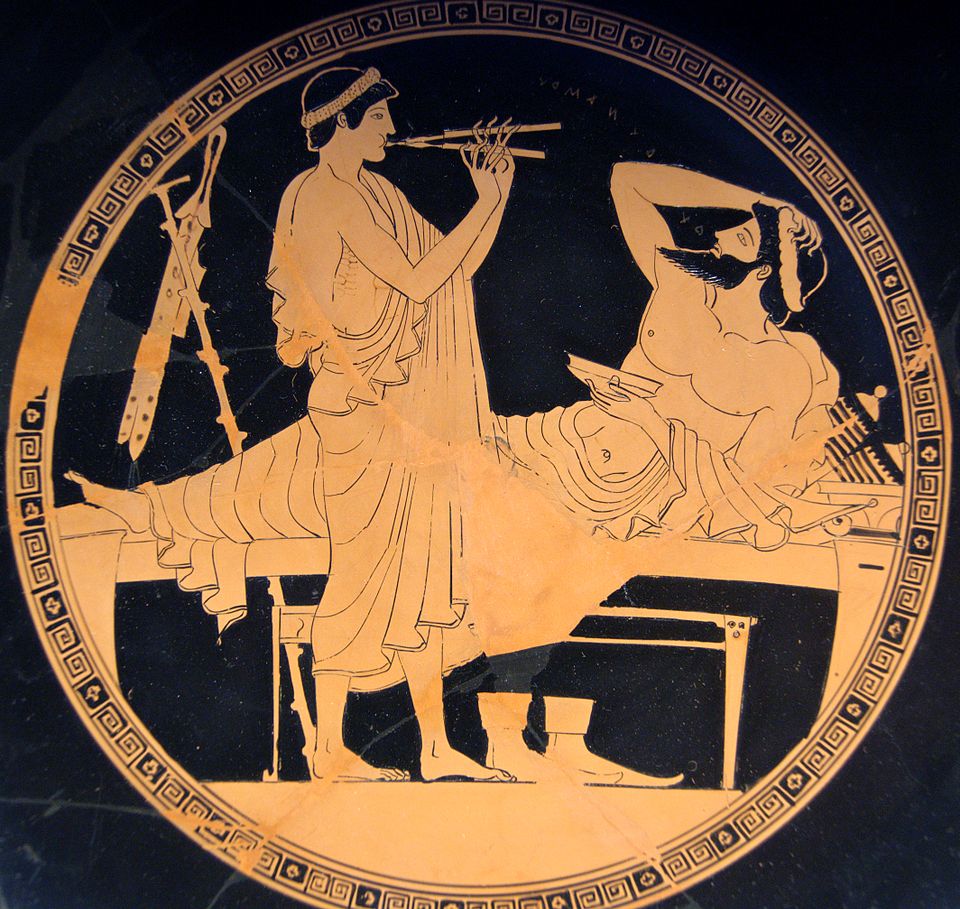
Horace implies that his great friend and patron Maecenas has been asking him to write lyric verse on unsuitable themes, including the victories of Augustus and the deeds of the legendary heroes of myth, including Hercules – shown, courtesy of the Met, on a fifth-century BCE kylix attributed to the painter Onesimos. You can do better justice to Augustus’s achievements yourself in prose, says Horace – I will stick to more familiar lyric territory and sing the praises of the lovely Licymnia.
Hear Horace’s Latin and follow in English here.
The immortal Marcel Proust was born on 10 July 1871. To celebrate, Pantheon Poets posts a recently-published love poem written when he was doing his military service. See the original and a parallel translation here.
Pyrrhus is captivated by his new love, Nearchus, but has he underestimated the lion-lady that he has stolen him from? Hear Horace’s Latin and follow in English here. The “Nearchus” in the illustration is the Emperor Hadrian’s favourite, Antinous.
Rainer Maria Rilke uses the swan to make a point about the difficulty of life and the serenity of death. Agree or disagree? Hear the German read by Tatjana Pisarski and follow in translation here.
Horace uses the metaphor of a ship in stormy seas to express his hope that Rome will win through to safety in a time of danger. Hear the Ode performed in the original Latin and follow in a new English translation here.
The illustration, by Rembrandt, is of Christ in the storm on the Sea of Galilee. If you happen to see this painting anywhere, please tell the Isabella Gardner Stewart Museum in Boston – it was stolen from them in 1990 and has not been returned.