Early in Virgil’s Aeneid, he explains why Juno, Queen of the Gods, can feel hatred for a man as pious and virtuous as the Trojan prince Aeneas.
Hear Virgil’s Latin and follow in English here.
See the illustrated blog post here.

On deep consideration, King Latinus accedes to Aeneas’s request through his ambassadors for peaceful permission to settle, and is ready to offer him his daughter’s hand in marriage. The prospects for peace look bright, but they are fragile and Juno is ready to take a hand and sow discord.
Hear the extract in Latin and follow in English here.
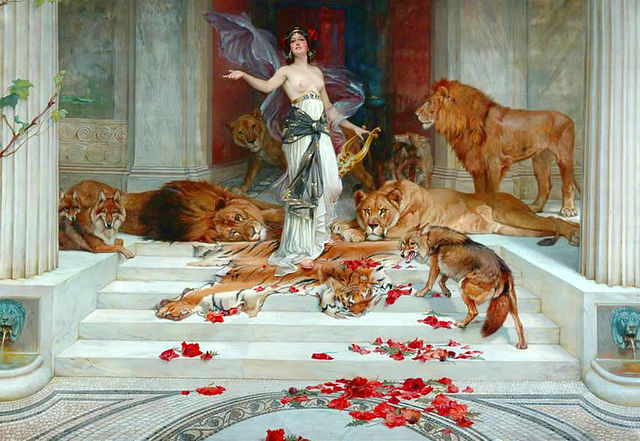
King Latinus, informed that strangers have arrived in the kingdom and that ambassadors have come to wait on him, goes to the heart of his court to receive them, a resplendent building with a hundred columns at the top of the city. It stands in a dense, sacred wood and serves as a temple as well as a throne-room, containing the spoils of war along with carvings of Latinus’s predecessors. One of these is of King Picus, whom the sorceress Circe turned into a woodpecker when he rejected her advances. He is not visible in this picture of Circe and her shape-shifted pets: perhaps he is staying out of reach of her lions and foxes.
Hear the Latin and follow in English here.

This is a landscape selection from the Latin poets (see the selections index here). The ancients would have assumed that the world was boundless and nature was inexhaustible, in contrast Continue Reading

Pantheon Poets continues to offer you a direct taste of spoken Latin poetry. You can follow the poems in the original whether you know Latin or not – you might for example be interested in later European writers and curious about what Latin influences meant to them. Today’s post is the final part of the story of Laocoon from Book 2 of Virgil’s Aeneid. He has warned the Trojans not to trust the wooden horse that the Greeks have left – he fears Greeks even when they bring gifts. Now, as fate and the Gods bring the fall of Troy ever closer, Laocoon pays a terrible price for his warning.
Today we publish a new selection of poems by Latin authors to hear in Latin and follow in English. See the selection here.