The door is getting the blame from the excluded lover, but begs to differ. See the blog with an illustration and hear and follow the poem.
Lydia has moved on and now idolises Calais, while her ex-lover now dotes on Thracian Chloe. The two exes vie with one another to celebrate how happy they are and the virtues of their new loves, but is the old flame really dead? Hear their dialogue in Horace’s Latin and follow in English here.

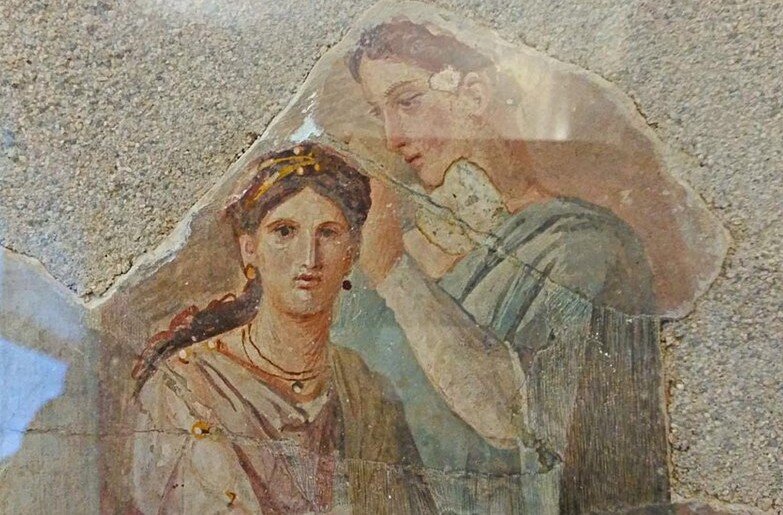
Horace has had a narrow escape: a tree on his estate has fallen and nearly crushed him. It was a serious matter for him – afterwards he celebrated his good luck on the anniversary of the incident every year – but he also uses the opportunity to heap half-humorous curses on the man who planted it. He reflects, rightly then and now, that you can manage risks that you know, but others may still catch you unawares. Then, pivoting to what he might have seen in Hades had he gone there, he evokes Alcaeus and Sappho (pictured) bringing everything to a halt with the beauty of their song. Hear Horace’s Latin and follow in English here.

Horace has met a young woman, fiercely attractive and extremely unsettling. He is definitely interested, but appeals to the Gods of love and wine, Bacchus and Venus, to let him take matters more slowly and with a level head.
The illustration, from Pompeii, shows Venus and her lover, Mars.
Hear Horace’s Latin and follow in English here.

Jupiter has saved Aeneas’s fleet from burning and his father Anchises appears with an invitation to visit him in the Elysian fields. The illustration, by William Blake Richmond, shows Anchises in his younger days when he first met Aeneas’s mother, the Goddess Venus. Hear the poem here.

Horace shows respect and affection in this invitation-poem to his patron Maecenas and pays a compliment to the future Emperor Augustus into the bargain.
Hear the Latin and follow in English here.