The spirit of Aeneas’s father brings him news of the favour of the Gods and an invitation to visit him in the Elysian Fields. Hear the extract here and see the illustrated blog post here.

Fighting back against the Greeks who have penetrated the city with the help of the Trojan horse, Aeneas and his men have initial success, but take a decision that will cost them dearly.
Hear Virgil’s Latin and follow in English here.
The latest post from Pantheon Poets is the story of Apollo and Daphne from Ovid’s Metamorphoses. In Ovid’s version, Apollo’s overwhelming love for the reluctant nymph is caused by Cupid as revenge when Apollo has poked fun at his bow, but the consequences for Daphne could not be more serious.
Hear Ovid’s Latin in the original and follow in English here.
See the illustrated blog post here.

The archer-God Apollo, flushed with his victory over Python, the monstrous serpent, has poked fun at Cupid’s bow, suggesting that such weapons are best left to the grown-ups. Cupid takes his revenge by inducing Daphne, a huntress-nymph, to renounce love altogether, and then making Apollo fall for her, head over heels.
Hear Ovid’s Latin and follow in English here.
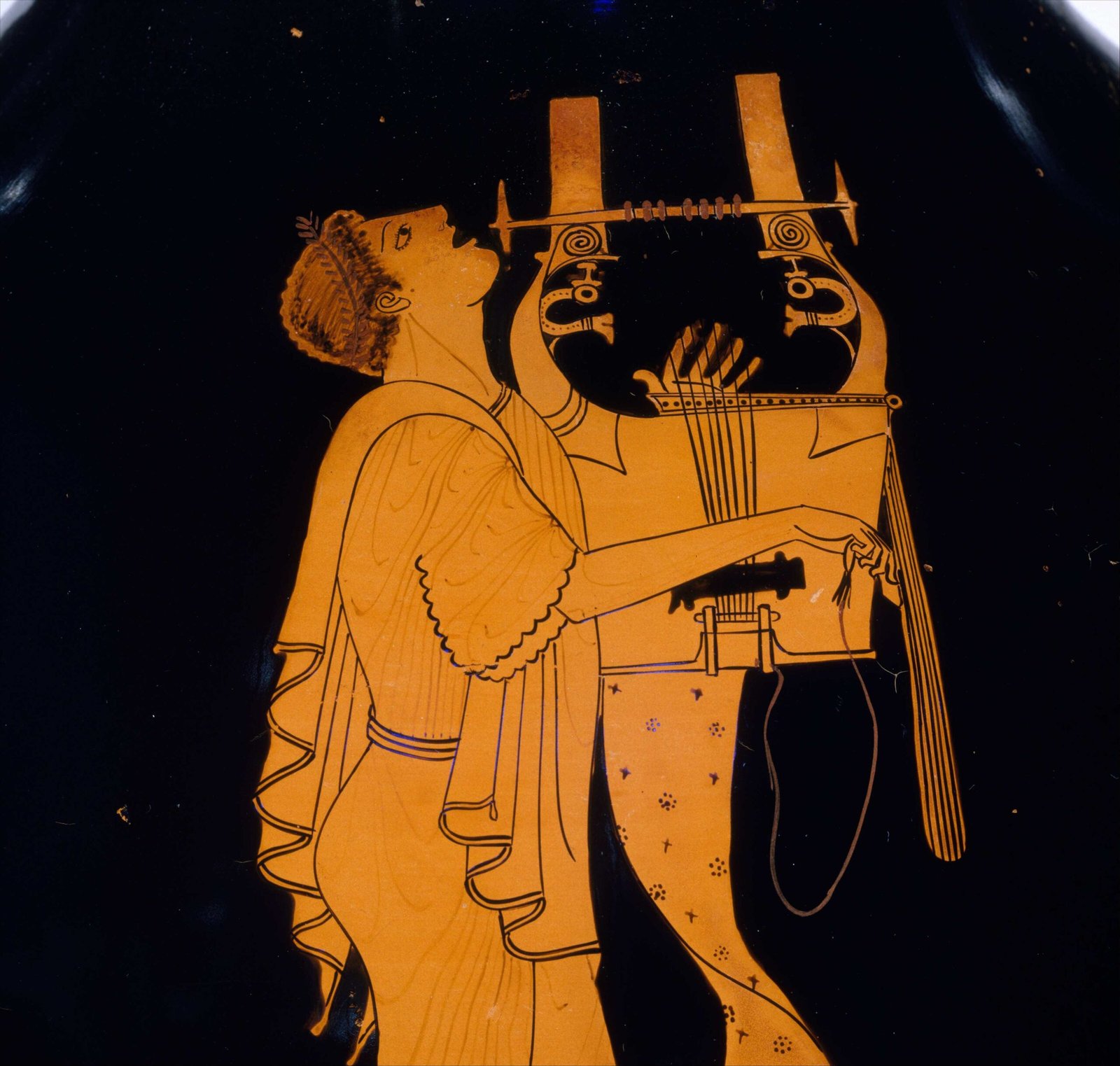
As the God of music, poetry and the lyre, Apollo is the patron deity of Horace the poet – though, as at the beginning of Homer’s Iliad, he has a more forbidding aspect as the archer-God whose arrows bring disease and death. In an ode offering philosophical life-lessons to Licinius, Horace uses this double aspect as a metaphor for the ups and downs of life, both of which we should be prepared to take as they come.
The illustration, of an Attic red-figure vase in the Met attributed to the Berlin painter, shows an extraordinarily detailed lyre, almost a technical drawing – note the plectrum, attached to the instrument by a thread to prevent it getting lost.
Hear Horace’s Latin and follow in English here.
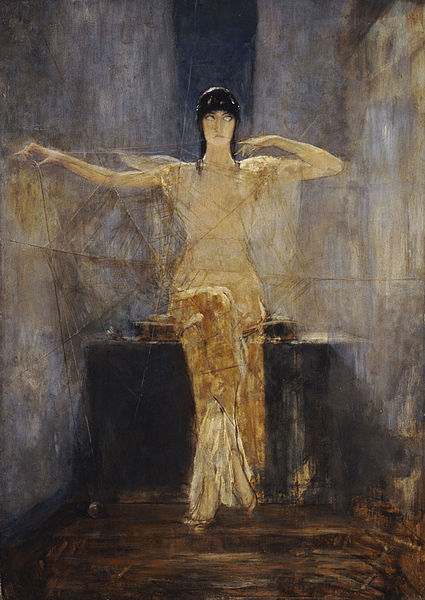
But wishes she hadn’t Hear the Latin, which contains probably the most succinct summary of the Gods’ sexual misbehaviour, here and follow in English.