
Close to the beginning of Horace’s first book of Odes, this ode is the first in which he develops the theme of carpe diem: spring is lovely, and the right time to sacrifice to the country God Faunus, but time is short and death inevitable. All sombre enough, but this piece has some hidden meanings. Sestius and Horace are probably old acquaintances, and there may be some little jokes here at his expense – along with an implied compliment to Augustus and his readiness to let bygones be bygones. Read more, hear Horace’s poem performed in Latin and follow in English here.

Horace’s second Ode paints a vivid picture of the time of troubles that Rome, beset by civil war, has suffered, before turning to identify and praise her saviour – the new Emperor, Augustus. The praise is lavish by our standards – it identifies the Emperor with a God on Earth – but there is no particular need to suspect Horace, an old republican, but now completely associated with the new regime and its leaders, of insincerity. The stability and peace provided by the new order would have been welcome to very many, as its durabilty – Augustus was to rule for a further 37 years after the date of this poem – shows.
Hear Horace’s Latin performed in the original and follow in English here.
The illustration, from the Ara Pacis, consecrated in 13 BC, is a symbolic representation of the peace and prosperity that Augustus’s reign has brought.

Horace uses the metaphor of a ship in stormy seas to express his hope that Rome will win through to safety in a time of danger. Hear the Ode performed in the original Latin and follow in a new English translation here.
The illustration, by Rembrandt, is of Christ in the storm on the Sea of Galilee. If you happen to see this painting anywhere, please tell the Isabella Gardner Stewart Museum in Boston – it was stolen from them in 1990 and has not been returned.
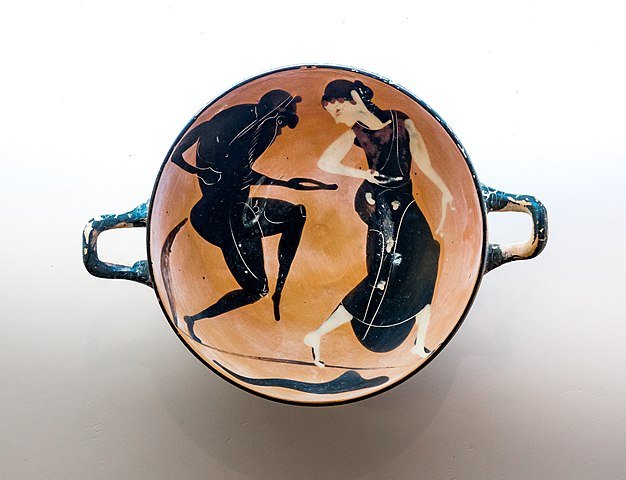
Many of Horace’s Odes are performed and translated on Pantheon Poets, but the first poems in the first Book, published in 23 BCE have a particularly important function. The very first Ode makes two very important points at the outset: the debt and affection that Horace feels for his great patron and friend Maecenas, to whom he effectively dedicates the whole collection; and the tremendous ambition that Horace has to create a new and distinctively Roman form of poetry, based on the great Greek lyric models of the past.
In the illustration as in Horace’s poem, a satyr dances in a typically Greek pastoral setting.
Hear Horace’s poetry performed in the original Latin and follow in a new English translation here.

In today’s Ode, Horace exclaims at the futility and presumption of the rich, who go in for grand building works, even encroaching on the sea in places like the luxurious seaside resort of Baiae. He prefers the simple life on his Sabine farm.
Horace uses Hipponactean metre, an unusual one found only here among his works. Hear his Latin performed in the original and follow in English here.
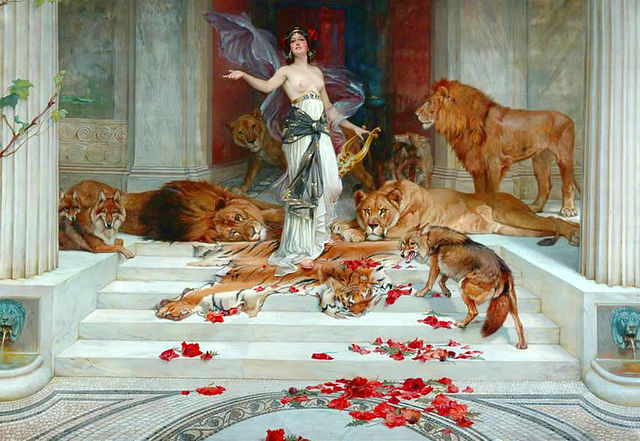
Today sees a new sound recording in our post of the opening lines of Homer’s Odyssey. Hear Homer’s Greek and follow in English translation here.
The illustration shows the Sorceress, Circe, who is only one of the many dangers that Odysseus encounters on his … well … Odyssey.

Horace makes a sweet, epigrammatic poem on a theme from the Greek models he so admires. Chloe wants to continue to stick close to her mother, but needs to realise that the time for love and adulthood is upon her.
Hear Horace’s Latin performed in the original and follow in English translation here.

Horace’s modesty, and the Muse who commands his unwarlike lyre, warn him not to risk damage to the reputations of the Emperor Augustus and Agrippa, his chief general, by trying to celebrate them by writing about themes that belong in epic verse – that is beyond his scope. Or so he says …
Hear Horace’s Latin and follow in English here.