No longer young, Horace makes a final attempt at seduction.
Hear Horace’s Latin recited and follow in a new English translation here.
See the illustrated blog post here.

Maybe ten years after the publication of his great three first books of Odes in 2023 BCE, Horace finds himself unexpectedly, and perhaps unwillingly, returning to the genre. He has been invited by Augustus to do so as a contribution to the glory of the new, but now very well established, imperial system, and invitations from that quarter are hard to refuse. The purpose of the second Ode in Horace’s new, fourth, book is primarily to celebrate Augustus by looking forward to a victory over a troublesome German tribe, the Sygambri, but he also takes the opportunity to put on record his critical appreciation of another great poet, Pindar. That, rather than dutifully fulsome praise of the Emperor, is what primarily makes this an attractive poem to a modern readership. Nevertheless, it is a good example of how the imperial regime approached establishing and augmenting its prestige through the arts, and the metre, singing and dancing along in Sapphics, make the piece attractive to listen to throughout. The triumph in the illustration is Caesar’s, one of a series painted by the Renaissance master, Mantegna. now in the royal collection at Hampton Court.
Hear Horace’s Latin and follow in English here.

Hear Horace’s welcome to his old army comrade Pompeius, with whom he fought – on the wrong side – at the Battle of Philippi. Augustus has magnanimously restored Pompeius’s civic rights, allowing him to return to Italy, and Horace is cracking out the wine in celebration.
Horace is ribbing an acquaintance, Iccius, for abandoning philosophy in the hope of getting rich quick from military campaigning. Horace’s matter-of-fact acceptance of imperial ambition, slavery and military conquest is completely normal for him and his contemporaries, but highlights some of the less attractive aspects of the times and society in which he lived.
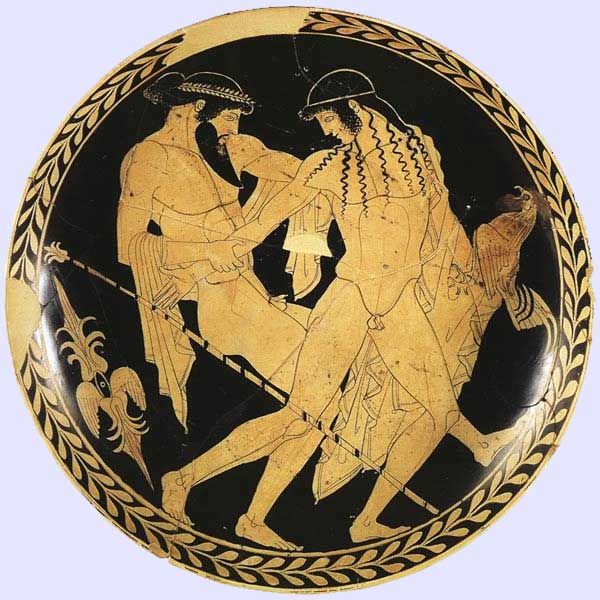
This boy with perfumed hair is Zeus’s favourite, Ganymede, from a 5th century BCE Attic ceramic.
Hear Horace’s Latin and follow in English here.
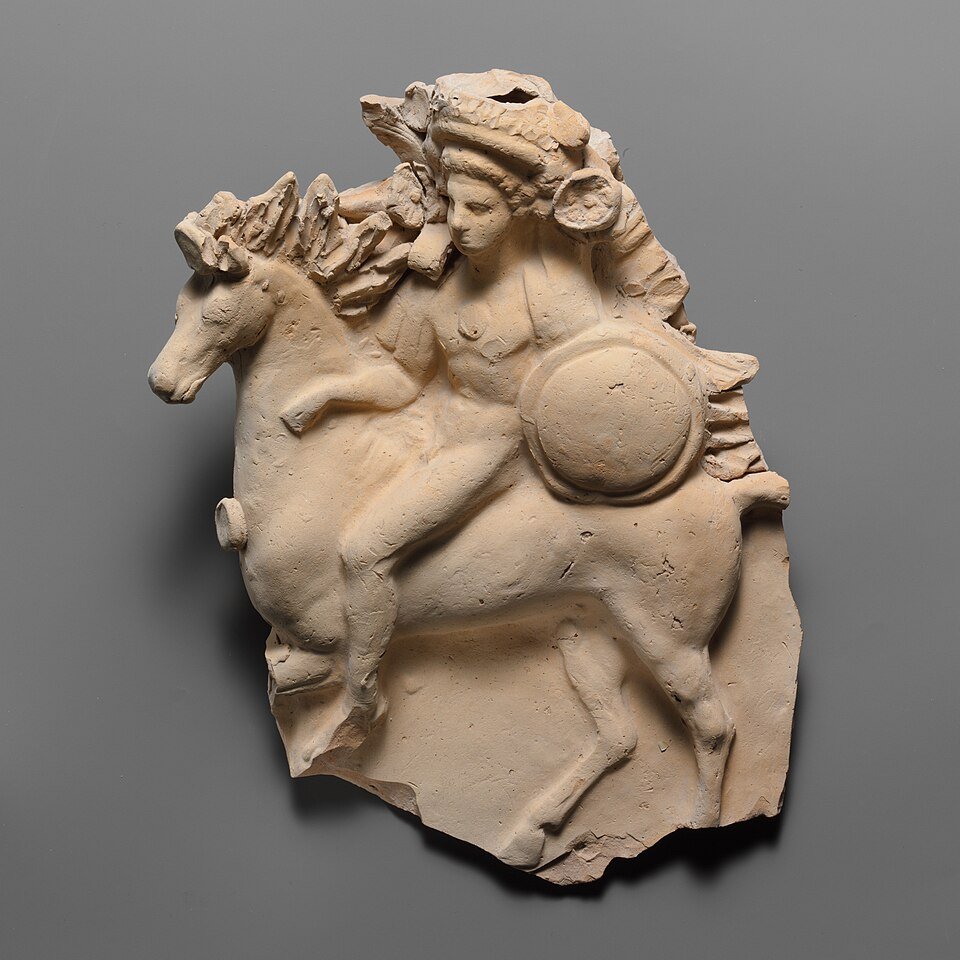
Horace is concerned that such a promising young cavalryman as Sybaris should be neglecting his trade because of a girl. Hear his complaint to her in Horace’s original Latin here.
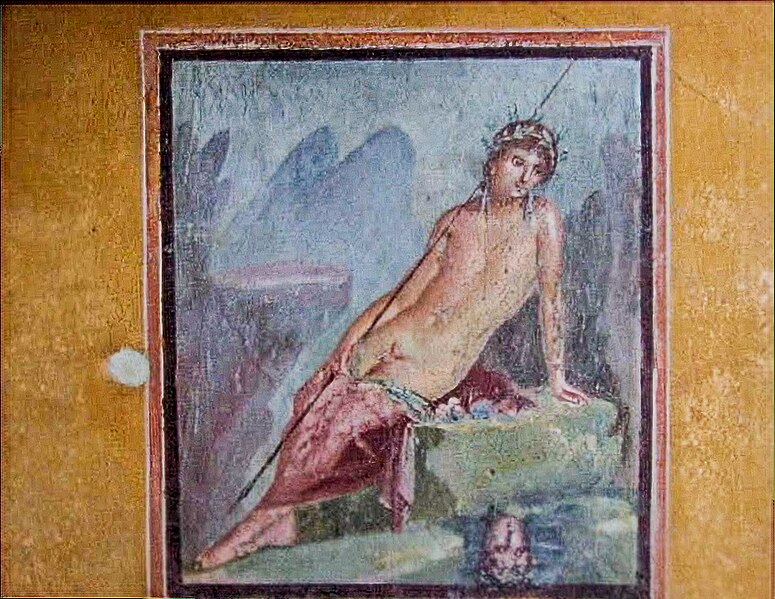
In philosophical mood, Horace advises a friend whose lover has left him for a younger man not to dwell on his woes. Love is often unrequited, and that is the way that Venus, who has a sense of humour, likes it. Hear Horace’s Latin and follow in English here. In the illustration Narcissus, with whom the nymph Echo is in love, has fallen for his own reflection in the water.
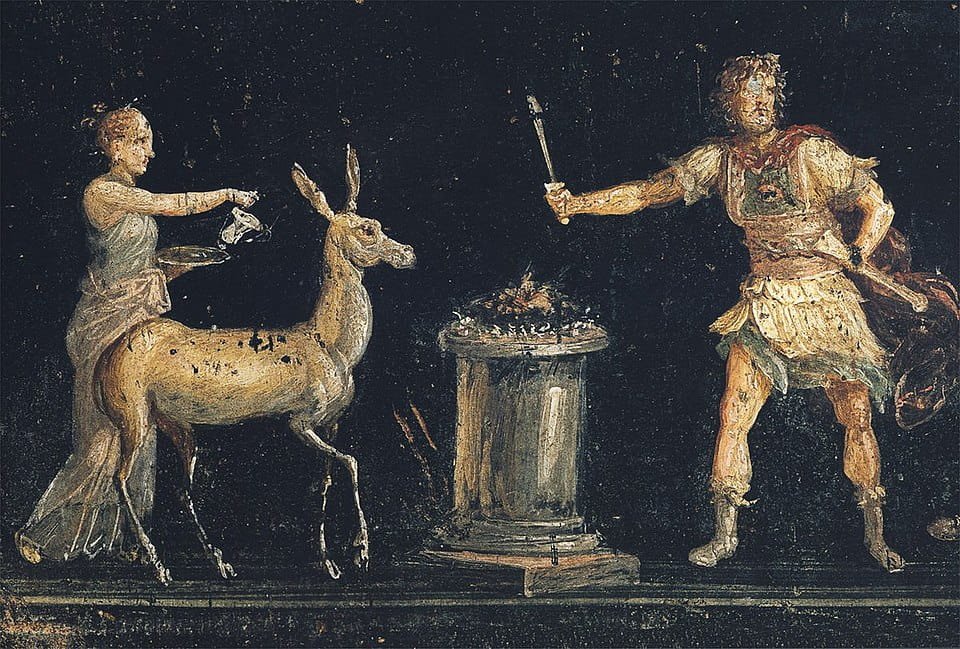
Diana and Apollo, brother and sister, were both associated with the bow; Diana as Goddess of the hunt, Apollo because he could be the bringer of sickness and death, an attribute with which he appears at the opening of Homer’s Iliad when the Greek leaders refuse to restore his priest’s daughter to her father. Octavian, the future Emperor Augustus, dedicated a temple to Apollo in 28 BCE, which very likely prompted this piece; Horace might well also have felt a particular affinity with Apollo as the God of Poetry. The illustration shows a sacrifice to Diana from the House of the Vetti at Pompeii. Hear Horace’s Latin and follow in English here.