
This selection is on the theme of Carpe diem – these days usually translated as “seize the day”, but you could equally well translate it as “pluck” the day – Continue Reading

Thunder from a clear sky reveals to Horace the real presence of the Father of the Gods.
See and hear Horace’s Latin translated and recited here.
Horace reflects on the predicament of a beautiful courtesan who is becoming an object of indifference, or even scorn, as she ages and loses her looks. How far he sympathises, and how far he is pleased at the change, is hard to say.
Hear Horace’s Latin and follow in English here.
See the illustrated blog post here.

As Horace brings the final book of his Odes to an end, an idealised Roman family of the future gathers to sing Augustus’s praises and give thanks for the peace and the imperial power that he has brought to Rome.
Hear Horace’s Latin and follow in English here.

Horace has met a young woman, fiercely attractive and extremely unsettling. He is definitely interested, but appeals to the Gods of love and wine, Bacchus and Venus, to let him take matters more slowly and with a level head.
The illustration, from Pompeii, shows Venus and her lover, Mars.
Hear Horace’s Latin and follow in English here.

Horace shows respect and affection in this invitation-poem to his patron Maecenas and pays a compliment to the future Emperor Augustus into the bargain.
Hear the Latin and follow in English here.
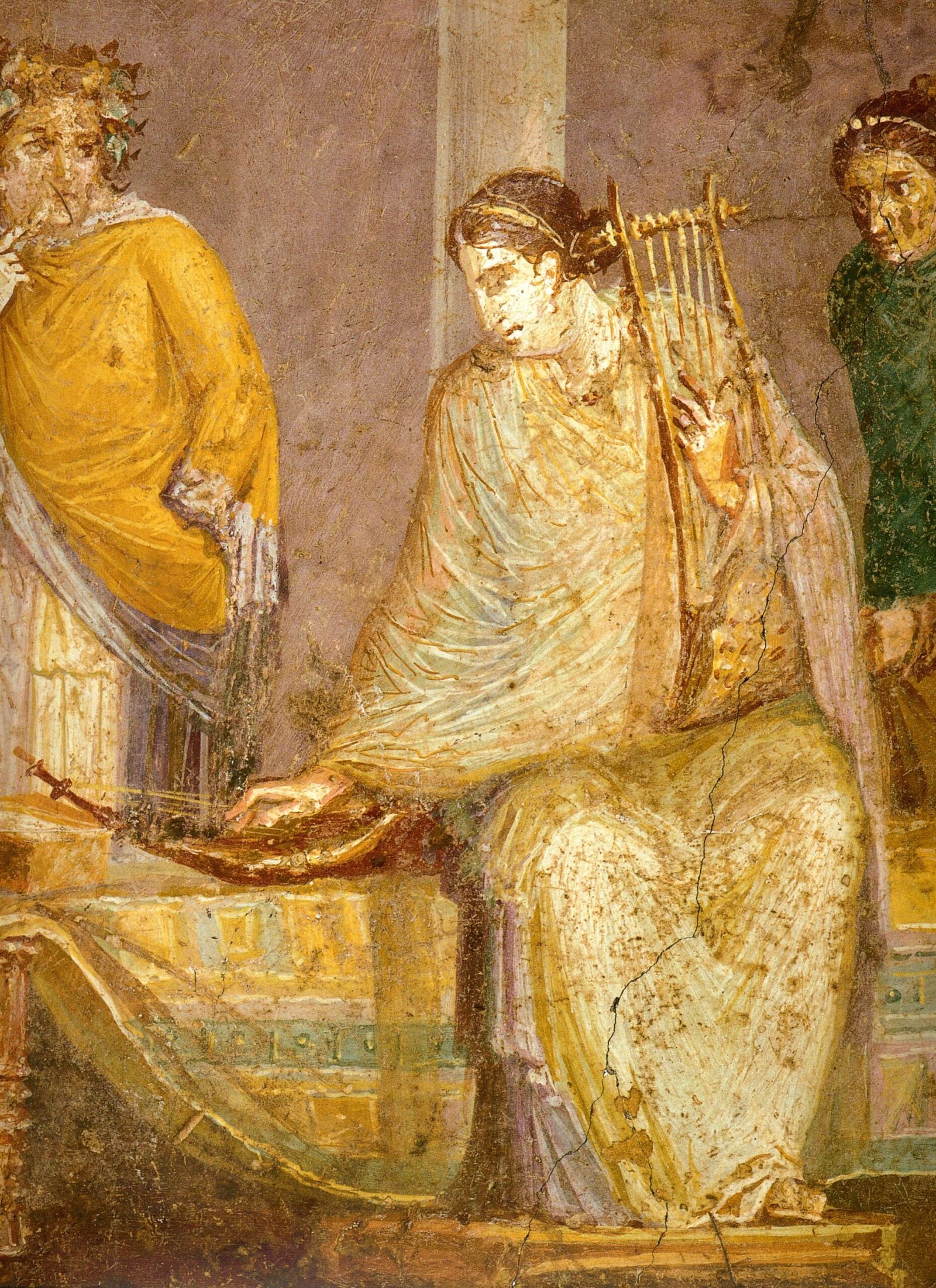
In Apollo’s newly-dedicated temple, Horace prays for the things that matter to him. The dedication has been an important public occasion, but his poem has a very personal feel, as he looks ahead to an old age to which he is resigned – provided he retains health, his mental faculties and the ability to write and enjoy poetry. Hear Horace’s original Latin and follow in English here.
In the illustration , a fresco from Pompeii, a cithara player cradles her instrument.