
See how Mount Soracte stands white with the deep snow … this is perhaps Horace’s most benign and attractive version of the carpe diem theme, with the stress on wine, warmth and love, rather than the inexorable journey to the grave. See and hear the poem here.

Today’s poem is taken from Schiller’s free German translation of Book 4 of the Aeneid, in which he describes how the Goddess Juno finally takes pity on Dido as she lingers in her death agony after stabbing herself with Aeneas’s sword and sends the rainbow-Goddess Iris to free her spirit from her body. Hear the German read by Tatjana Pisarski and follow an English translation here.

Horace has had an unexpected encounter with a wolf: it has run from him although it is a monster and he is unarmed. Horace puts this down to the upright life he leads and the honest love he feels for his mistress, Lalage. Hear the Latin and follow in English here. The lovely wolf photograph is by Gary Kramer of the US Fish and Wildlife Service.

Back home from Troy with Helen, Menelaus reflects. The vision of the reunion at the fall of Troy is by the fifth century BCE Brygos painter. Read the poem by J de S Westbrook here.
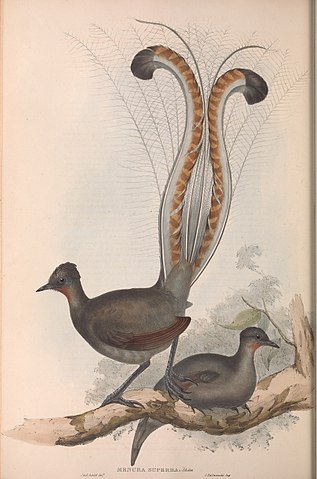
In the “Poscimur” ode, Horace addresses his lyre and claims that, together, they have made a new type of Roman poetry by transmuting Greek originals. The lyre is probably not a real one, any more than this lyre bird is: it stands for Horace’s poetic skill and genius. Hear the poem and follow in English translation here.

The great German poet Friedrich von Schiller wrote a thrilling free version of the Books of Virgil’s Aeneid which deal with the fall of Troy and the Story of Dido and Aeneas. This extract from the second – Book 4 – is Dido’s reproof to Aeneas when she discovers he has been planning to leave her. Listen to the German read by Tatjana Pisarski and follow an English translation here.
The illustration shows another famously and justly angry mythical woman – Medea – painted by Evelyn de Morgan.

Palinurus the great navigator and helmsman is betrayed and thrown overboard by the God of Sleep. The Gods have decreed that his life is the price of his companions’ safe onward journey: he will become the archetype, down the ages, of the poor mariner lost at sea. Hear the extract here.
Illustration: Wikipedia Loves Art participant “Opal_Art_Seekers_4“, WLA taft Plate with Palinurus Overboard, CC BY 2.0


Jupiter has saved Aeneas’s fleet from burning and his father Anchises appears with an invitation to visit him in the Elysian fields. The illustration, by William Blake Richmond, shows Anchises in his younger days when he first met Aeneas’s mother, the Goddess Venus. Hear the poem here.

Aeneas’s enemy Juno has duped his tired and travel-worn Trojan women into setting fire to his ships while he holds rich funeral games in Sicily for the anniversary of the death of his father Anchises. Juno and the women hope that he will give up his destiny in Italy and settle where he is. In today’s extract here, Aeneas calls on Jupiter to save the ships in the nick of time. Help is granted: only the old, tired and timid will stay and Aeneas will go on to Italy with a smaller but more select band composed solely of the young, brave and battle-ready. In the illustration, Claude Lorrain (1600 – 1682) uses the incident as an excuse for a charmingly mysterious seascape.