
Another war against the Parthians looks in the offing and the outcome of the last one does not reflect well on Roman military pride and moral fibre. An inspiring example is needed. Step forward Regulus, who long ago persuaded the Senate to reject a deal with the Carthaginians which would have saved his own life. Hear the Regulus Ode here.

In an ode in which Horace is referencing a poem by Alcaeus, one of his most revered early Greek models, he not only commends wine – in moderation – but also reminds us of its dangers. As an example, he gives the wedding of the legendary hero and friend of Theseus, Pirithous, at which the centaurs who had been invited got drunk and molested the bride, triggering a pitched battle.
Hear Horace’s Latin and follow in English here.
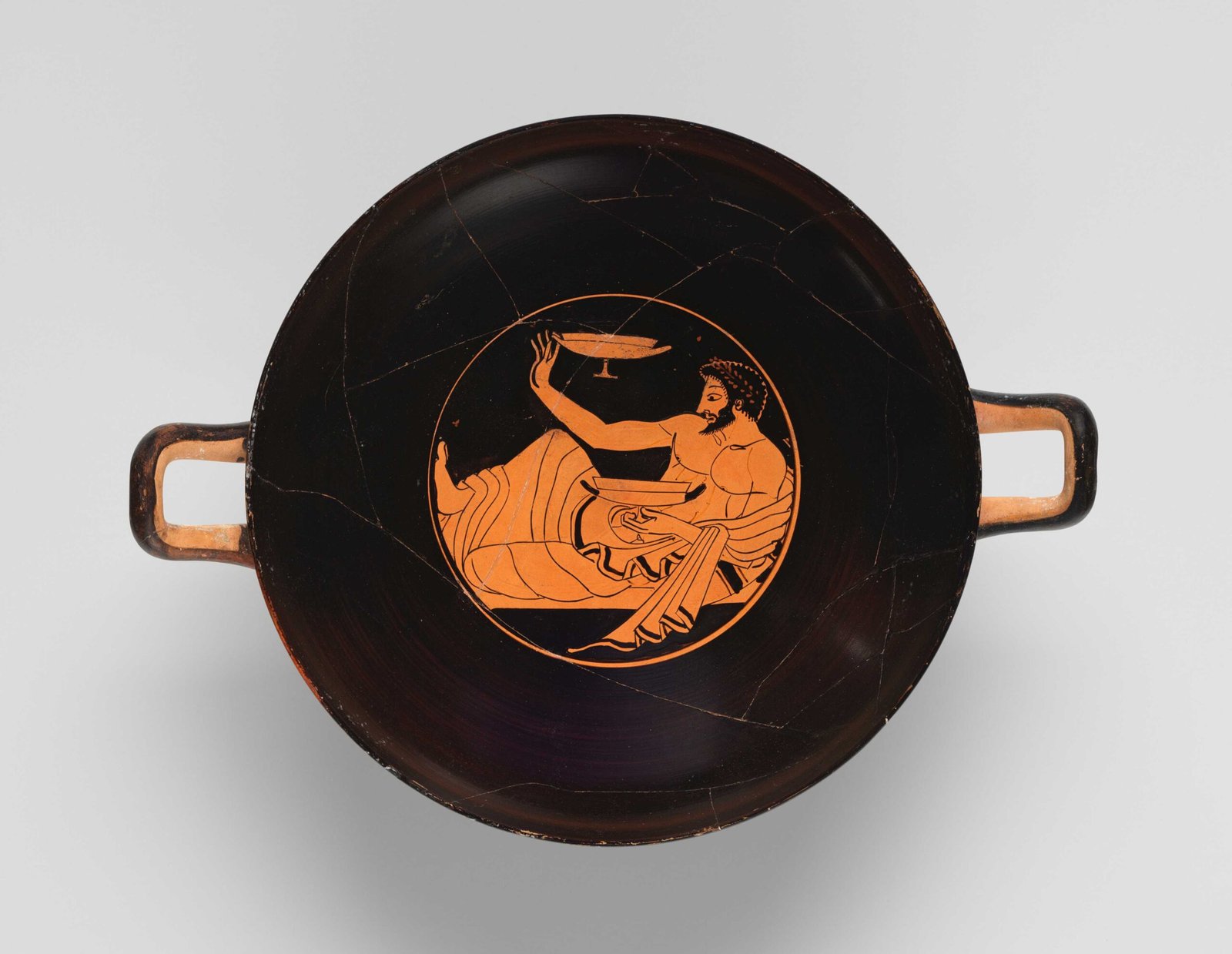
Another variation on Horace’s favourite theme of carpe diem – seize the day, though the verb has more subtle meanings – harvest it like a crop, for example, or pluck it like a flower. Wine in the shade is better than fretting about what is happening on Rome’s frontiers, which are a very long way away. The Greek drinker in the illustration is on an Attic red-figure wine cup, courtesy of the Metropolitan Museum in New York. They have a fine collection and excellent online access to it, so pay them a visit.
Hear Horace’s Latin and follow in English here.
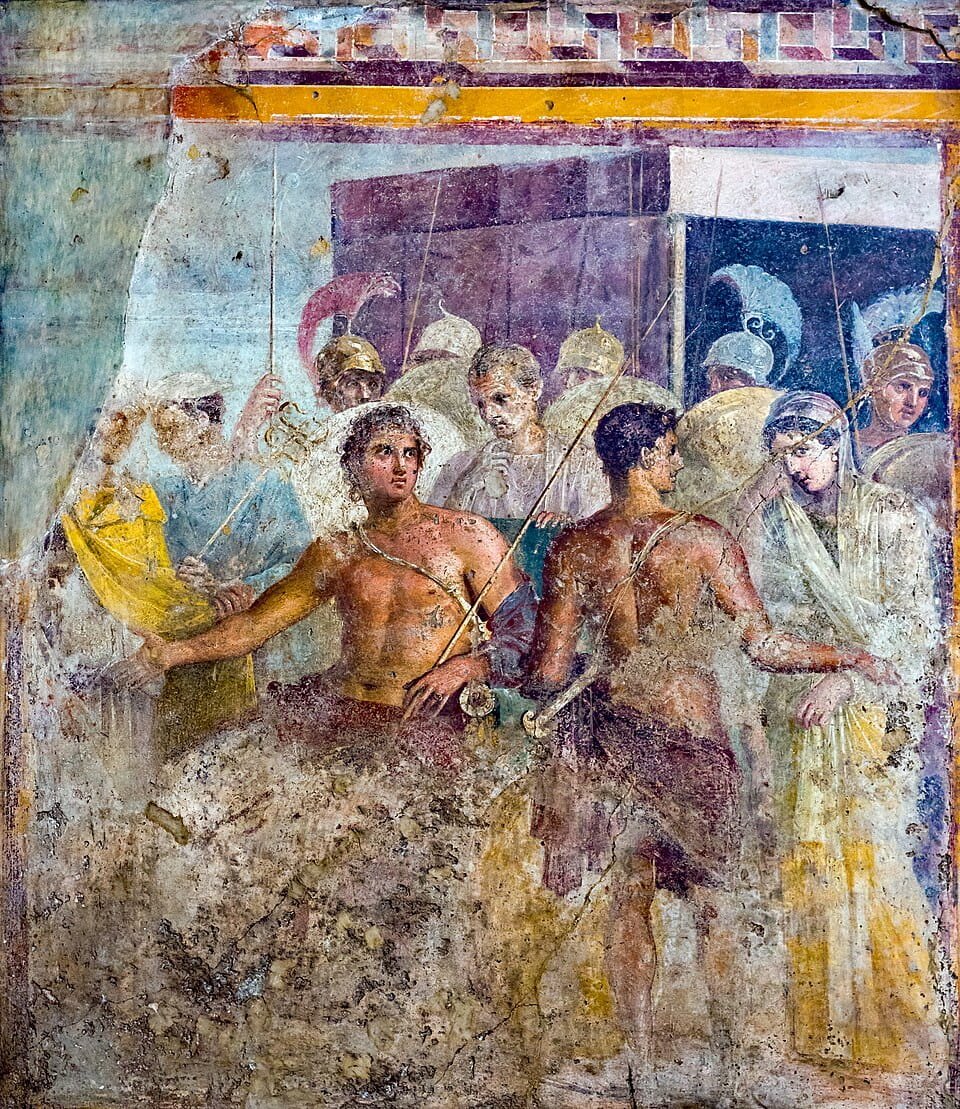
Xanthias the Phocian is in love with a slave. What does Horace think? What he says is reassuring and supportive on the surface, but, as TE Page the Victorian commentator pithily remarks, the intention is clearly satirical throughout. As part of his (apparently) supportive reasoning, Horace quotes examples from among Greek heroes who fought the Trojan War – one of them Achilles, who was captivated by the captive Briseis but had her confiscated by Agamemnon to replace a priest’s daughter whom he had to return to her father to appease Apollo, as related at the beginning of Homer’s Iliad. This was the cause of Achilles’s withdrawal from the fighting and the starting-point of the events that ensue in Homer’s great epic.
Hear Horace’s Latin and follow in English here.
The illustration form a Roman fresco shows the parting of Achilles and Briseis. (Photo ArchaiOptix, licensed under CC BY-SA 4.0 , via Wikimedia Commons