See and hear passages from Schiller’s fine German version of Books 2 and 4 of the Aeneid, follow in English and compare with Virgil’s Latin original.
Today we publish a selection of extracts from Friedrich von Schiller’s free version of Book 2 of Virgil’s Aeneid, in which Aeneas tells the story of the fall of Troy, and Book 4, in which Aeneas’s ill-fated affair with Queen Dido of Carthage ends in tragedy. See the selection here, hear Schiller’s German read by Tatjana Pisarski, and use the links to compare his version with Virgil’s original.
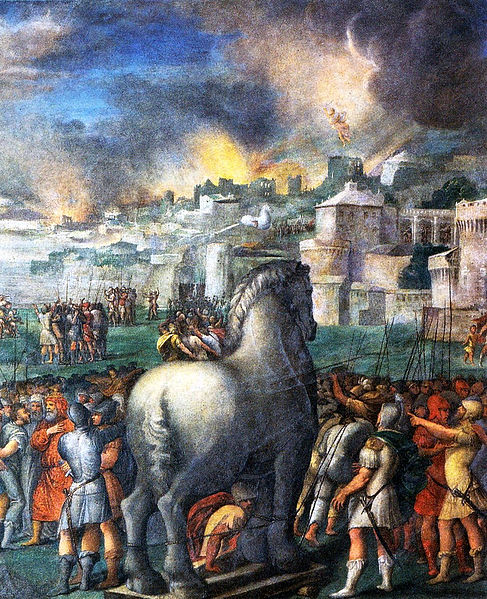
The next step on Pantheon poets in bringing spoken Latin poems by such greats as Virgil, Horace, Catullus and Ovid to Latin and non-Latin speakers alike, and throwing light on Latin influence on great European writers, will be one of the best bits of the Aeneid, as monstrous snakes lay Laocoon, the wise Trojan priest, low. Does this herald the fall of Troy? Will the Trojan Horse enter the city? Hear it recited in Latin, follow the Latin poetry in English translation. Watch this space as Aeneas continues to tell his tale to Queen Dido …

This selection is composed of extracts in narrative order from each of the twelve Books of Virgil’s great epic devoted to the glory and divine origins of Rome and Aeneas’s Continue Reading

We announce the completion of the Pantheon Poets Aeneid – 61 extracts read in Latin with English translation, telling the story of Aeneas from the fall of Troy to the establishment in Italy of a new settlement which will one day become Rome and a dynasty which will culminate in the Caesars and the Emperor Augustus. See it here.

Pantheon Poets’ latest project is an intensive journey through Book 6 of the Aeneid, in which Aeneas visits the underworld. He was not the first: Odysseus had paid a visit in Homer’s epic, and Greek myth was full of gods, demigods and heroes who attempted to visit the land of the dead and return. Nor perhaps does Book 6 have the immediacy of Book 2, the most compelling account in real time that we have in ancient epic of the fall of Troy, or the tragic effect of the failed love affair between Aeneas and Dido in Book 4. It is, however, probably the work on which the exceptional standing of Virgil in the post-ancient world most strongly rests.
The Virgil of Book 6 especially came, as the possessor of a vast creative imagination, to be seen as transcending mundane humanity: someone whose ability to conceive a world so outside human experience, beyond the general run of myth and story, marked them as possessing occult knowledge and power.
This side of him most definitively entered European culture when Dante chose him as his guide through Hell, Purgatory and Heaven in the Divine Comedy, written in 13th century Italy. But it existed already before Dante: there are many references in ancient writers to the use of Virgil’s works as a prophetic medium. Choose a random passage, and it would provide you with an oracle through which to consider the question that was preoccupying you. This practice, known as the sortes Virgilianae, survived long into the modern world, famously, for example, being followed by King Charles the First in 17th century Oxford.
If Virgil’s status as a magician has receded, Book 6’s enduring influence on the European literary imagination has been more durable. Dante, re-imagining the Hadean journey in a Christian age, Milton in his blindness imagining Satan on the throne of Hell, Bunyan in the Pilgrim’s progress, Thomas Gray in the mid-1700s personifying the enemies of human happiness (in his ode on a distant prospect of Eton College), as Virgil did in Book 6, were all stepping in his footsteps. So too were writers as diverse as Tolkien, taking hobbits under the mountain for riddles with Gollum or to dodge Balrogs in the Mines of Moria, and Jules Verne with his travellers to the centre of the Earth.
Enjoy. You can link to the first extract and make the acquaintance of Aeneas’s guide, the Cumaean Sybil (illustrated above), here.

A mighty epic ends as Aeneas plunges his sword into the wounded Turnus’s heart. Hear the final extract from the poem in Virgil’s Latin and follow in English here.