One of the most loved poems in Book 4 of Horace’s odes is “diffugere nives”, Ode 4.7. Season always follows season, it says, but the times of human life, by contrast, are not renewed indefinitely. Ultimately, we are dust and shadow: not even the greatest of mortals can rescue themselves or those they love from the bonds of the underworld. It is rather gloomy for our taste, good for a funeral or memorial, but dampening to the spirits. The next poem, 4.8, is very much less well-known, but it brings a contrasting measure of hope: physically, we cannot live for ever, but there is a way in which our merits and achievements can, if they are immortalised by art, including the art of the poet. It is a message that slips under the radar even for many who know Horace’s work well, but it clearly mattered to Horace a great deal because he positions it right in the middle of the Book and uses a metre that he reserves exclusively for special occasions. See Horace’s Latin and follow in English here.
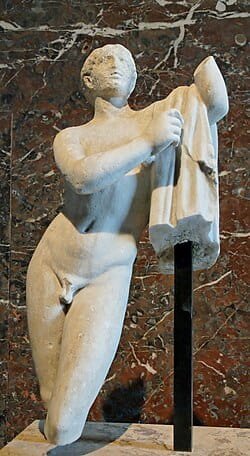
The illustration is a Roman copy of an earlier statue of Pothos, personification of desire, by Scopas, the sculptor whom Horace mentions as the master of his art.