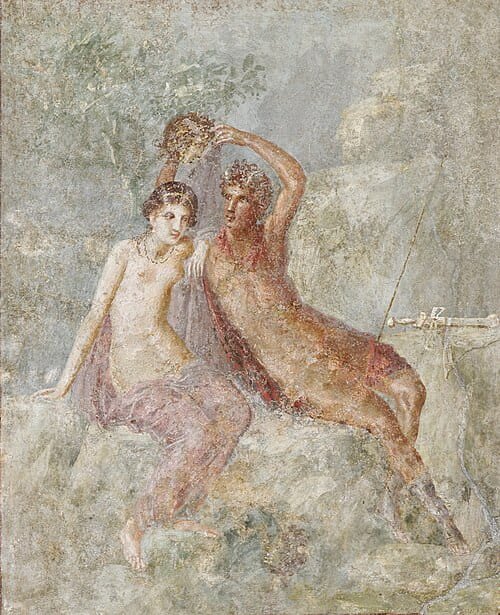
“The more a man denies himself gain, the more he will get from the gods.,” Horace tells his audience. This is all in line with the central teachings of Epicurean philosophy: aim for sufficiency and the absence of discomfort, rather than excess which arouses envy and wealth which brings care. The life which Horace represents as so frugal is none other than his own, led on his famous Sabine farm, a present from his wealthy patron and dear friend Maecenas, to whom the poem is addressed. Talking down the value of the gift to the extent that Horace does here could be seen as tactless, but, clearly, the warmth and closeness of their personal bond could cope with it. One of the examples that Horace quotes of wealth causing trouble is the story of Danae, to seduce whom Jupiter turned into a shower of gold, fathering the hero Perseus, shown with Andromeda, whom he rescued from a sea-monster, in this fresco from Pompeii.
Hear Horace’s Latin and follow in English here.