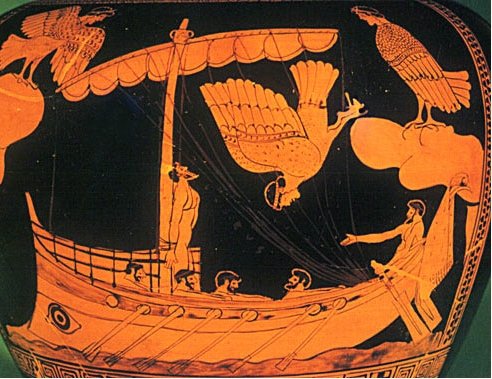
A French poet, writing during the Renaissance, wants an example to illustrate how his travels have left him with an aching nostalgia for his home near the Loire. He finds two, and they come, not from his contemporary world, but from the myths of the Greeks and Romans – Odysseus, who had such a difficult journey home from the Trojan war, and Jason, who went to the edge of the known world to find the golden fleece.
Why does the poet, Joachim Du Bellay, turn as if by second nature to the ancient world for his material? Because, like most western poets and writers from the Renaissance up until the first half of the twentieth century, he was steeped in ancient Roman and Greek culture and literature, and fundamentally influenced by them. This creates a challenge if you want to know and understand “modern” European writers like Du Bellay. but, like all but a tiny minority in the UK today, you have never studied an ancient language or read any of the Latin and Greek classics in the original. One purpose of Pantheon Poets is to offer you a way to bridge this gap. Part of the difficulty is that ancient languages work in very different ways to modern ones, and rules governing how poetry was written are also very different and hard to convey in translation to a modern reader. So Pantheon Poets offers ancient poetry with the original text, an English translation and a recorded performance – as ancient poetry was most often composed with performance, rather than silent reading, in mind. Taken together, these offer a much more authentic encounter with great literature from the ancient world than that available purely from modern literary translations.
Hear Du Bellay’s poem “Heureux qui comme Ulysse”, one of the most beloved in the French language, in the original, and follow in English, here